Key takeaways
- Google DeepMind announced Humanity’s First Exam on November 24, 2026: 544 prompts in 136 four-prompt families across 20 foundational capabilities.
- The report releases 112 prompts under CC-BY-4.0 and retains 432 as a private holdout; the full benchmark is not a fully public evaluation set.
- Google reports that its top five models reach 96%–98% single-shot accuracy but average 85.8% on the stricter family consistency metric.
- HFE tests single-turn answer correctness, not uptime, tool execution, agent safety or end-to-end workflow success.
What Google announced
Google DeepMind launched Humanity’s First Exam (HFE) on November 24, 2026, with a Kaggle benchmark and a community challenge running through December 15. The release asks a practical question: can a model reliably answer an elementary question and closely related variations, rather than produce a correct answer on one favorable attempt?
The dataset contains 544 text and image prompts across 20 foundational capabilities. Google’s technical report evaluates 18 frontier and fast-tier models. This is an evaluation release, not a new model or API: it introduces no inference model ID, token price or new serving entitlement. Builders can consult the linked report and Kaggle surfaces now; the report identifies a downloadable public subset, not unrestricted access to every test item.
What is public, and what stays held back
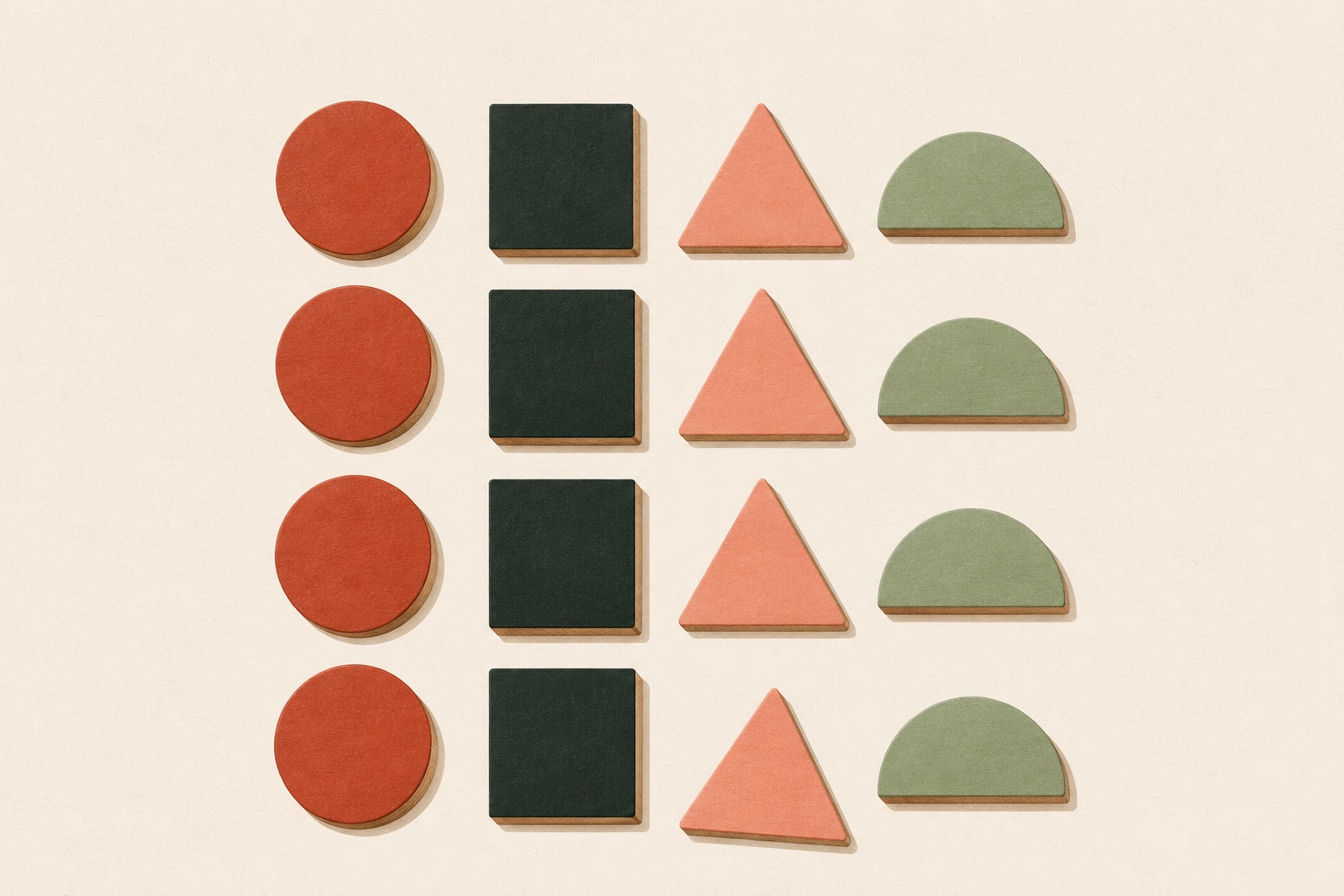
The report organizes the benchmark into 136 families, each with one seed question and three variants. There are 316 text-and-image prompts and 228 text-only prompts. Tasks include object counting, color identification, following constraints, symbolic operations and reading charts. Variants preserve the underlying skill and task logic, but do not necessarily preserve the answer.
Google says it releases 112 prompts in 28 complete families under CC-BY-4.0 on Kaggle and keeps 432 prompts in 108 families private to reduce contamination. That distinction matters for reproduction: a builder can experiment with the public split, but cannot recreate the full private-holdout score from that subset alone.
The announcement invites community submissions of everyday questions models still get wrong through December 15. We opened the benchmark and leaderboard URLs successfully, but their retrieved HTML did not expose a readable score table. We have not verified a live rank, downloaded the dataset, joined the challenge or checked account-level participation requirements.
Why a nearly perfect score can still hide inconsistent answers
HFE separates the chance of getting at least one answer right from the chance of getting every answer right. The paper samples six generations per prompt and estimates metrics for groups of four draws. Prompt-level pass@4 asks whether at least one of those draws succeeds; pass^4 asks whether all four succeed.
At family level, family pass@4 asks whether at least one rollout succeeds anywhere across the four related prompts. Family pass^4 instead requires success across all four draws for each of all four prompts. These are deliberately different standards, not alternate names for accuracy. The reported metrics are estimates from sampled outputs, not promises about every future request.
According to Google’s report, its top five models reach 96%–98% pass@1 and 100% family pass@4, yet average 85.8% family pass^4, with individual values from 80.5% to 92.4%. Google also attributes 73% of wrong answers to visual perception. These are vendor-reported benchmark results; AccessAllGPT did not call the models, reproduce the scores or independently validate their grading.
The benchmark is useful, but its floor is not your service guarantee
HFE deliberately selects diagnostic failures rather than sampling the frequency of ordinary customer requests. Seed creation included an error on a calibration panel and review for simplicity, relatability and surprising failure. Later filtering removed ambiguity and standardized the families. A score on that curated set therefore does not estimate how often your application will fail in production.
Nor does “human-solvable” mean humans always get every item right. The report gives 90.8% single-rater accuracy on the retained seed questions, not on every variant. Its primary grader is Gemini 3.1 Pro at temperature zero, with a separate Claude Fable 5.2 audit of failed prompt–model pairs. That is useful methodological disclosure, but remains an author-run evaluation with model-based grading.
The study explicitly scopes itself to single-turn tasks to avoid conflating model behavior with external tools or agent harnesses. It does not measure availability, network errors, tool permissions, multi-step recovery or the reliability of an entire agent. A strong HFE result is evidence about a particular answer-consistency test, not authorization to remove workflow checks.
What builders and buyers should do next
Use HFE to add a missing dimension to a model shortlist, not to replace task-specific evaluation. For an image-reading or extraction product, create several equivalent versions of a real task, repeat each with fixed model and inference settings, and record both average correctness and all-correct family success. Keep a separate latency and cost record rather than folding them into an unexplained composite score.
Our analysis: the most useful change is in the acceptance question. “Can it do this?” is weaker than “Does it keep doing this correctly when the wording or image layout changes?” Inspect the actual errors before paying for more reasoning or retries. Google reports that extra reasoning helps visual tasks less than text and symbolic tasks; whether that applies to your inputs still needs measurement.
A small consistency check for your next model evaluation
An AccessAllGPT evaluation template inspired by HFE, not an official HFE reproduction.
Entries stay in this browser tab and are not submitted to AccessAllGPT. Blank responses are copied as [Unresolved].
Start with one representative request and three variants that preserve the skill. Write and verify an answer key for each variant.
Pin the model identifier, image processing, prompt and generation settings. Record all attempts, including empty or incorrect outputs.
Show average correctness alongside the fraction of complete families that pass every required attempt. Label your local metric rather than calling it an official HFE score.
Evaluate tool behavior, latency, cost and recovery separately. Retain human or deterministic checks where a wrong answer has material consequences.
Primary sources
Browse the publication-wide evidence index →
- Humanity’s First Exam launch announcementGoogle / Google DeepMind · Reviewed: November 24 announcement date; benchmark description; prompt count; leaderboard and technical-report links; December 15 community challenge · Retrieved · Supports: First-party announcement of HFE, its stated focus on elementary-task consistency, 544 prompts across 20 capabilities and the community submission window.
- Humanity’s First Exam: Measuring the Reliability Floor of LLMsGoogle DeepMind, Google Cloud and Google Research · Reviewed: Abstract; sections 2.1–2.6 benchmark design and human baseline; sections 3.1–3.2 metric definitions and grading · Retrieved · Supports: Author-reported 18-model results, dataset composition and public/private split, CC-BY-4.0 public release, repeated-sampling metrics, seed selection, human accuracy and model-grader methodology.
- Humanity’s First Exam on KaggleGoogle DeepMind / Kaggle · Reviewed: Accessible benchmark HTML title and description; destination of the official announcement’s challenge link · Retrieved · Supports: The linked Kaggle benchmark route resolves and identifies HFE; retrieved HTML alone does not verify participation requirements or live leaderboard scores.
- Humanity’s First Exam leaderboardGoogle DeepMind / Kaggle · Reviewed: Accessible leaderboard route and HTML identity; dynamic score-table access limitation · Retrieved · Supports: The official live-leaderboard destination resolves; no readable live score table was obtained and no live ranking is claimed.
Limitations
Public-source briefing, not a hands-on model test or independent benchmark reproduction. We did not download the public dataset, access private prompts, execute evaluations, audit raw rollouts or verify live Kaggle scores and challenge eligibility. Numerical results and methodology are attributed to Google’s technical report. Curated single-turn task consistency does not establish production error rates, serving reliability or end-to-end agent safety.
Disclosures
Public-source reporting and AccessAllGPT analysis, not sponsored coverage. No vendor reviewed or endorsed this briefing. AccessAllGPT Research is operated by NeuralArc; publication-wide relationships are described on the disclosures page.